
Guide
How to earn money by making UGC videos in India
You do not need a big following to earn money making videos in India. Brands pay creators for authentic, phone-filmed content that performs better in ads than polished studio footage. This guide walks you through every income path, what rates look like in 2026, and exactly how to get started this week.
On this page
Quick answer
Who this guide is for and what you will learn
This guide is written for anyone in India who wants to turn a phone and a little on-camera confidence into a real income stream. You might be a college student looking for a side income, a homemaker who wants flexible work, a part-time content creator curious whether UGC pays more than brand-sponsored posts, or someone who just heard the term UGC and wants to understand it from scratch.
By the end of this guide you will know the seven main ways to earn money from UGC videos, what realistic income looks like at every stage, a 30-day plan for landing your first paid gig, and how UGC Content connects you with brands that pay creators for video content - without requiring you to have thousands of followers first.
Can you really earn from UGC videos in India?
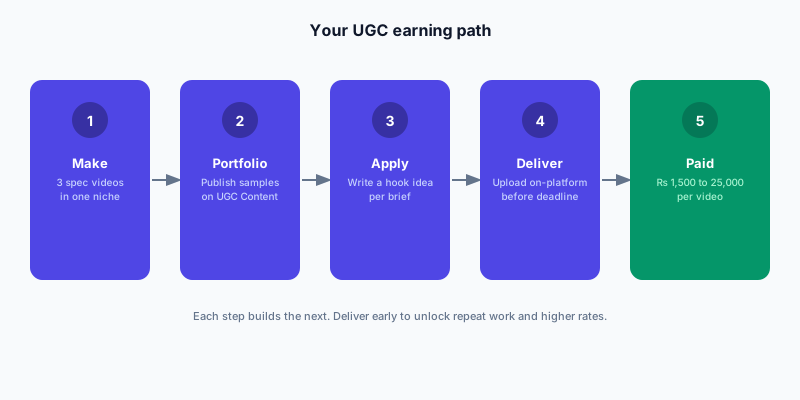
Yes, and the opportunity is growing fast. India's digital advertising spend crossed Rs. 50,000 crore in 2025, and a significant and rising share of that budget goes toward creator-made video content. Brands have discovered that authentic phone-filmed testimonials, unboxings, and tutorials convert better in performance ads than expensive studio productions. That gap between what brands need and what traditional advertising agencies supply is exactly where UGC creators earn their income.
The model is straightforward. A brand needs ten different 30-second videos showing their skincare product being used at home. Instead of hiring a production crew, they post a campaign on a platform like UGC Content, pay ten creators Rs. 1,500 to Rs. 5,000 each, and get ten authentic videos they can test across Instagram Reels ads, YouTube pre-rolls, and Amazon product pages. You create the video, deliver the file, and get paid. No audience required.
The legitimacy question comes up a lot with beginners. UGC creator income is real, it is growing, and it is already a full-time career for thousands of creators in India. The key difference between it and dropshipping or other 'make money online' schemes is that you are providing a genuine service: brands get usable video assets and you get paid for creative work.
7 best ways to make money from UGC videos in India
There is no single income path for UGC creators. Most successful creators combine two or three of the following methods, which spreads risk and accelerates income growth. Below are the seven most practical options available to creators in India right now, ordered roughly from easiest to start to highest ceiling.
- Paid campaigns on UGC platforms - Brands post specific briefs, you apply, submit the video, and get paid per accepted video. This is the cleanest starting point because requirements are clear and payment is handled by the platform.
- Direct brand outreach - Once you have two or three sample videos, you pitch brands via email or Instagram DM and offer your UGC services. Rates are negotiable and typically 20 to 40 percent higher than platform campaigns.
- UGC retainer contracts - A brand pays a fixed monthly fee for a set number of videos each month. This gives stable income and is usually available after you have worked with a brand once or twice.
- Instagram Reels bonuses - Meta pays creators in India through its Creator Monetization programs when Reels hit view thresholds. This stacks on top of UGC income and requires no brand deal.
- YouTube monetization on tutorial content - If your UGC work is in a category like cooking, fitness, or beauty, building a YouTube channel around tutorials lets you earn AdSense revenue alongside brand fees.
- Stock footage and b-roll sales - Short clips of everyday Indian life, food, street scenes, and products sell on Shutterstock, Adobe Stock, and Pond5. Phone-filmed vertical content sells well for social media use.
- Teaching UGC skills - Once you have a portfolio and track record, creators earn through workshops, paid newsletters, and course platforms by teaching other beginners how to get started.
| Income path | Effort to start | Monthly ceiling (beginner) | Monthly ceiling (experienced) |
|---|---|---|---|
| Platform campaigns | Low | Rs. 5,000 to Rs. 15,000 | Rs. 40,000 to Rs. 80,000 |
| Direct brand outreach | Medium | Rs. 8,000 to Rs. 20,000 | Rs. 60,000 to Rs. 1,20,000 |
| Retainer contracts | Medium-high | Rs. 10,000 to Rs. 25,000 | Rs. 80,000 to Rs. 1,50,000 |
| Reels bonuses | Low | Rs. 1,000 to Rs. 5,000 | Rs. 10,000 to Rs. 30,000 |
| YouTube AdSense | High (time to build) | Rs. 500 to Rs. 3,000 | Rs. 20,000 to Rs. 60,000 |
| Stock footage | Low | Rs. 500 to Rs. 2,000 | Rs. 5,000 to Rs. 15,000 |
| Teaching UGC | High (need portfolio) | Rs. 5,000 to Rs. 15,000 | Rs. 50,000 to Rs. 2,00,000 |
How to earn money from Instagram as a UGC creator
A lot of beginners confuse the UGC path with the influencer path on Instagram, and the confusion leads them to focus on the wrong things early on. An influencer earns because brands want access to their audience. A UGC creator earns because brands want the video file they produce. You can be a UGC creator on Instagram with 500 followers or 500,000 followers. The follower count is irrelevant to getting paid for the video itself.
The Instagram-specific income paths for UGC creators break into three categories. First, you can use Instagram as a portfolio showcase, posting your sample UGC videos in a professional account that brands and platforms can review when you apply for campaigns. Second, once you reach 10,000 followers, Instagram's Creator Marketplace opens up, which connects you directly with brands for paid partnership posts. Third, Meta's Reels performance bonuses pay eligible Indian creators based on plays, which can add Rs. 2,000 to Rs. 10,000 a month as a passive layer on top of your primary UGC income.
The practical advice here is to build your UGC portfolio first and your Instagram following second. A creator with 800 followers, five strong portfolio videos, and a completed UGC Content profile will land more paid work than a creator with 8,000 followers but no clear UGC positioning or sample content. Start with the product, not the audience.
How much do beginners actually earn from UGC videos?
The rates below are based on what Indian creators report earning on UGC Content campaigns and from direct brand work in 2025 and 2026. These are realistic ranges, not best-case scenarios. Rates vary by niche, video quality, turnaround speed, and whether usage rights are included.
| Video type | Rate per video | Videos per month (beginner) | Monthly estimate |
|---|---|---|---|
| Product testimonial (30 sec) | Rs. 800 to Rs. 2,500 | 5 to 8 | Rs. 4,000 to Rs. 20,000 |
| Unboxing video (60 sec) | Rs. 1,200 to Rs. 3,500 | 4 to 6 | Rs. 4,800 to Rs. 21,000 |
| Tutorial / how-to (60-90 sec) | Rs. 1,500 to Rs. 5,000 | 3 to 5 | Rs. 4,500 to Rs. 25,000 |
| Lifestyle b-roll pack (5-10 clips) | Rs. 1,000 to Rs. 3,000 | 2 to 4 | Rs. 2,000 to Rs. 12,000 |
| Full UGC ad (hook + body + CTA) | Rs. 2,500 to Rs. 8,000 | 2 to 4 | Rs. 5,000 to Rs. 32,000 |
30-day plan: land your first paid UGC video
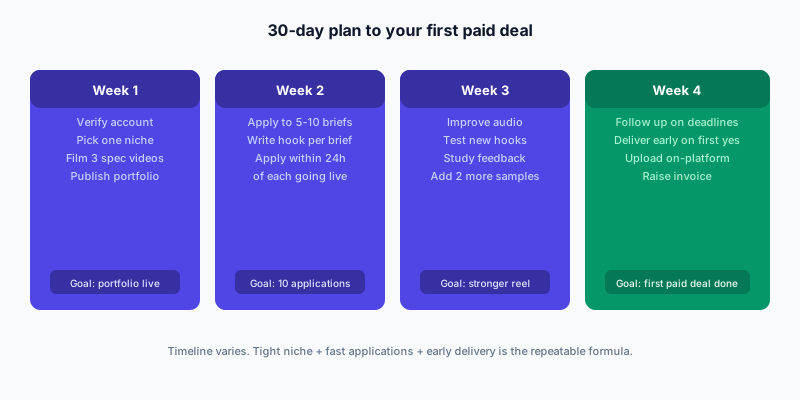
This plan assumes you are starting from zero. No portfolio, no history with brands, and possibly no UGC Content account yet. Follow the steps in order. Each week builds on the previous one.
- Day 1 to 7: Set up and shoot three sample videos
Create your UGC Content creator account and fill in every profile field. Choose one or two niches you genuinely use products in - skincare, fitness supplements, kitchen gadgets, or tech accessories are high-demand categories in India. Pick three products you already own and film one UGC-style video for each: a testimonial, an unboxing, and a short tutorial. You do not need ring lights or a gimbal. A clean background, decent natural light from a window, and your phone in portrait mode is enough. Upload these three videos as portfolio pieces.
- Day 8 to 14: Apply to your first campaigns
Browse open campaigns on UGC Content that match your niche. Read each brief carefully - brands describe exactly what they want, the tone, the format, and the key message. Apply to three to five campaigns. Your application should reference the brief directly and link to the most relevant portfolio video. Do not send a generic application. Brands on platforms review dozens of applications and the ones that reference the brief details get selected at a much higher rate. Even if you are rejected from your first few applications, the feedback shapes your next attempt.
- Day 15 to 21: Shoot and deliver your first accepted brief
Once you get accepted to a campaign, treat the brief like a job. Read it twice before filming. Note the required format (aspect ratio, length, tone), the key message, and any restrictions - some brands prohibit competitor mentions, certain music, or specific product claims. Film two to three takes of each shot, not just one. Edit to remove dead air from the start and end of the clip. Export at the highest quality your phone allows. Deliver before the deadline and include a short note about what the video covers so the brand knows what they are receiving.
- Day 22 to 30: Get reviewed, request feedback, and apply again
After delivery, the brand reviews and approves your video or requests revisions. Most first-time creators get one round of feedback. Take that feedback seriously - it tells you exactly how to improve your next submission. Once approved, your payment is processed through UGC Content. Use this final week to apply to two more campaigns, update your portfolio with the completed video, and start drafting a simple outreach message for direct brand pitches. You now have a track record and a portfolio, which are the two things that unlock higher rates.
How to find paid UGC gigs in India
There are four main channels for finding paid UGC work in India, and you should use all four once you have at least a basic portfolio ready.
UGC platforms like UGC Content are the most structured option. Brands post campaigns with clear briefs, rates, and timelines. You apply, get selected or rejected, and deliver. Payment is protected by the platform. This is the best starting point because the friction is low and the feedback loop is fast.
Instagram and LinkedIn DMs are the next channel. Many Indian D2C brands actively look for UGC creators and post about it on their brand Instagram pages or in the bio. Follow brands in your niche, watch for campaign calls, and send direct pitches to their marketing handles. Keep your DM short: three sentences introducing yourself, one line about the relevant niche experience, and a link to your portfolio.
Creator communities and WhatsApp groups focused on UGC work in India are an underrated channel. Brands and agencies post urgent campaign requirements in these groups, often with faster turnaround and higher rates because they need someone quickly. Look for groups connected to UGC Content and digital marketing forums.
Agency relationships are the long-game channel. Digital marketing agencies in India that manage social media and performance marketing for brands are constantly buying UGC content. One agency relationship can mean a steady stream of monthly work. Find agencies on LinkedIn, connect with social media managers, and pitch your UGC services directly.
UGC as a side hustle vs. going full time
Most UGC creators in India start part-time, and that is the smart approach. The income is real but variable in the first three to six months while you build your portfolio and reputation. Treating it as a side hustle at the start means you are not under financial pressure to accept low-rate campaigns or rush work.
The signals that suggest you are ready to go full-time are: consistent monthly income above Rs. 40,000 for at least three consecutive months, at least two or three repeat brand clients, a diverse income mix with both platform campaigns and direct brand work, and a waitlist of brands wanting to work with you. Most creators who go full-time reach this point in nine to eighteen months.
The practical difference in approach is volume and speed. A side-hustle creator can complete three to six videos a month alongside a job or studies. A full-time creator typically manages fifteen to thirty videos a month across multiple brands and categories. The jump in output requires better systems: pre-built script templates, a consistent filming setup, reliable editing workflows, and clear brand communication processes. These are learnable skills, not natural talents.
Worked example: Priya's first month as a UGC creator
Priya is a 24-year-old in Pune who spends money on skincare and noticed her product testimonial videos got more engagement than her regular posts. She had 2,200 Instagram followers and no prior experience with paid brand work.
In week one, Priya created her UGC Content profile, selected beauty and skincare as her primary niche, and filmed three portfolio videos: an honest review of a vitamin C serum she already used, an unboxing of a face wash she bought specifically for the test, and a 45-second tutorial on applying a sheet mask correctly. She used her bedroom window for light, her iPhone 13 in portrait mode, and CapCut on her phone for basic editing.
In week two, she applied to six campaigns on UGC Content. Two were for skincare brands, two for fitness supplements she had never tried, and two for home goods. She was selected for one skincare campaign paying Rs. 2,200 for a 30-second testimonial and one home goods campaign paying Rs. 1,400 for a lifestyle clip.
She delivered both videos in week three, received one revision request from the skincare brand (they wanted more emphasis on the texture of the product), and both were approved by the end of week four. Total first-month income: Rs. 3,600. More importantly, she had two approved samples added to her portfolio, a clear sense of what brands expected, and three more campaigns already in progress for month two.
By month three, Priya was earning Rs. 18,000 a month, entirely from skincare and beauty campaigns. She had turned down the fitness supplement and home goods categories to go deeper in beauty, where her reviews were more credible and her rates were climbing.
Common mistakes new UGC creators make
- Applying to every category rather than picking one or two niches and going deep - generalist creators get selected less often than niche creators with relevant-looking profiles.
- Filming in bad lighting and expecting brands to overlook it - natural window light is free and dramatically better than overhead room lights or phone flashlights.
- Writing generic application messages that do not reference the brief - brands can tell immediately when an application is copy-pasted.
- Not reading the brief fully before filming - missing a key requirement like aspect ratio or a prohibited claim means a revision or rejection.
- Pricing too low out of desperation in early months - very low rates train brands to see your work as cheap and make it harder to raise rates later.
- Neglecting the portfolio because real campaigns feel more important - every video you complete should be updated in your portfolio, even if you are busy.
- Quitting after two or three rejections - rejection in early applications is normal. It is feedback on your positioning and portfolio, not a verdict on your long-term potential.
- Ignoring revision requests as criticism rather than treating them as a paid education in what brands want.
How UGC Content pays creators
UGC Content is a platform that connects Indian brands with verified UGC creators. When a brand posts a campaign, they set a budget and a per-video rate. You apply with your portfolio and a short pitch. If selected, you receive the brief, film the video, and upload it through the platform.
Payment is held in escrow by UGC Content when the brand funds the campaign. Once the brand approves your video - or after the review window closes without rejection - the payment is released to your creator wallet. You can withdraw to a bank account linked to your UGC Content profile. For most campaigns, the review window is three to five business days.
The platform also handles usage rights. When you accept a campaign, the agreed usage terms are documented. You know before filming whether the brand can use your video in paid ads, for how long, and whether they can modify it. This protects you from brands using your work beyond what was agreed and removes the awkward negotiation that comes with direct brand deals.
Creator tiers on UGC Content affect which campaigns you see. New creators start with access to standard campaigns. As you complete videos and earn positive brand reviews, your profile score increases and you unlock access to premium campaigns with higher rates and faster payment terms. The fastest way to move up is consistent delivery and zero late submissions.
FAQ
Do you need followers to earn money from UGC videos?
No. UGC brands pay for the video file, not your audience. A creator with 300 followers and a strong portfolio will get selected over a creator with 30,000 followers and no relevant sample videos. Follower count is simply not a factor in most paid UGC campaigns.
Can students earn money from UGC videos in India?
Yes. Many Indian UGC creators are college students. The work is flexible - you can film on weekends, evenings, or between classes. The income ranges from a few thousand rupees a month as a side income to Rs. 20,000 or more per month for students who commit consistently.
Is UGC content creation a legitimate job in India?
Yes. UGC creator income is real work income. Brands are paying real budgets for video content that drives real advertising results. The income is not passive or speculative - you produce a deliverable (the video) and you get paid. It is similar to freelance graphic design or copywriting.
How much tax do you pay on UGC income in India?
UGC creator income is typically treated as professional income or income from freelance services and is taxable under Indian income tax law. If your annual income from UGC work exceeds Rs. 20 lakh, GST registration is required. Below that threshold, income is still taxable but GST registration is optional. Consult a chartered accountant for your specific situation.
How long does it take to earn your first Rs. 10,000?
Most creators who start with a complete profile and three portfolio videos earn their first Rs. 10,000 within four to eight weeks. Creators who start without a portfolio or apply to irrelevant categories often take two to three months. The difference is almost entirely in preparation, not in natural talent.
What niche pays best for UGC creators in India?
Skincare, beauty, D2C health supplements, electronics accessories, and food products consistently show the highest campaign volumes on Indian UGC platforms. Finance and insurance UGC is also growing rapidly and pays well, but the compliance requirements are stricter. Start with the niche you genuinely know and buy products in.
Can you do UGC work without showing your face?
Yes, for certain content types. B-roll lifestyle clips, hands-only product demos, and voiceover-only tutorials are legitimate UGC formats that brands use. However, testimonial and talking-head videos - the most common and highest-paying UGC format - require you to appear on camera. Most creators who start with faceless content eventually move to on-camera work for higher rates.
What equipment do you need to start making UGC videos?
A smartphone made in 2020 or later, good natural light (a window works perfectly), and a free editing app like CapCut are enough to start. Do not buy equipment before you have earned from UGC work. A ring light (Rs. 800 to Rs. 2,000) and a small tripod (Rs. 400 to Rs. 1,000) are worthwhile upgrades once you are consistently getting campaigns.
How do you handle brands that do not pay after video delivery?
This is why using a platform like UGC Content is strongly recommended for beginners. The platform holds payment in escrow before your video is even submitted, so the money exists and is protected before you do the work. In direct brand deals, always get a signed brief or email confirmation of the rate before filming anything.
Can UGC video work be done from a small town or rural India?
Yes. The content is delivered digitally and brands do not require you to be in a metro city. Many successful Indian UGC creators work from tier-2 and tier-3 cities. A good smartphone, reliable internet for uploads, and a clean filming space are the only infrastructure requirements.