
Guide
How to do brand collaboration on Instagram in India
Getting paid brand deals on Instagram in India is possible without a large following, without an agent, and without waiting for brands to approach you. This guide explains the difference between paid collaborations and unpaid barter deals, shows you how to find brands, and gives you word-for-word templates you can use to pitch today.
On this page
Quick answer
To land a paid brand collaboration on Instagram in India: find brands in your niche that already work with creators, send a short DM or email with your niche, a specific content idea, and a link to two or three sample videos, negotiate a rate based on your deliverables (not your follower count), confirm usage rights and payment terms in writing, deliver the content, and invoice through the platform or directly. Most first deals happen within two to four weeks of consistent outreach.
Who this guide is for
This guide is for Indian content creators who want to earn money through brand partnerships on Instagram. It covers both UGC-style deals (where brands pay for video content they use in their own ads) and influencer-style deals (where brands pay for posts to your audience). It is written for people with 500 to 50,000 followers, though the outreach and negotiation principles apply at any follower count.
If you have not yet filmed any content and want to start from scratch, read the filming guide first. If you want to understand earning potential before diving into outreach, the earnings guide covers rates and income ranges in detail. This guide assumes you have at least two or three sample videos or portfolio posts ready to share with brands.
UGC collab vs. influencer collab vs. barter - what is the difference?
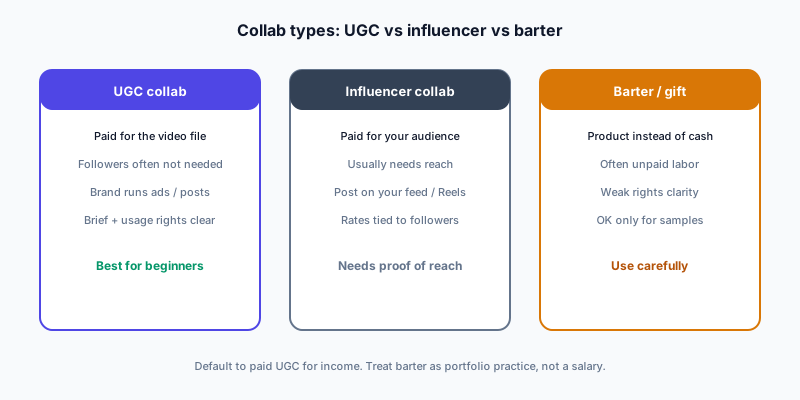
The term 'brand collaboration' covers three very different arrangements, and knowing which one you are discussing when you contact a brand determines how you pitch, how you price, and what you should accept.
| Type | What you deliver | What brand pays for | Follower requirement | Typical rate (India) |
|---|---|---|---|---|
| UGC collaboration | Video or photo files for brand's own use in ads and social | Content creation and usage rights | None - portfolio matters | Rs. 800 to Rs. 8,000 per asset |
| Influencer collaboration | Post or Reel to your audience with brand mention | Access to your audience and credibility | Usually 5,000 minimum; often 10,000 or above | Rs. 2,000 to Rs. 50,000 per post depending on reach |
| Barter / gifting | Post or story mentioning the brand in exchange for free product | Nothing - this is unpaid exposure | Variable | Zero cash |
How many followers do you need for a paid brand deal?
For UGC-style deals - where the brand pays for the video file itself - you need zero followers. Brands using UGC content for ads care about the quality and authenticity of your video, not how many people follow you on Instagram. A 600-follower creator with three strong portfolio videos can get the same UGC campaign rate as a 60,000-follower creator.
For influencer-style deals - where the brand pays to reach your audience through a sponsored post - follower count matters, but it is not the only metric. Indian brands look at engagement rate (comments and likes divided by followers), niche alignment, audience location (metro vs. tier-2 vs. rural), and content quality. A creator with 8,000 highly engaged followers in a specific niche like organic baby food or running can often command higher rates than a creator with 40,000 generic followers.
The practical threshold for influencer deals in India is approximately 5,000 to 10,000 followers with an engagement rate above 3 percent. Below that, position yourself as a UGC creator rather than an influencer. You will get more work, earn comparable or better rates, and build a portfolio that helps you grow your following at the same time.
How to find brands looking for creators in India
There are five practical channels for finding brands to pitch in India, and you should use all of them in parallel rather than focusing on just one.
Instagram itself is the most direct channel. Search hashtags used by Indian D2C brands in your niche - for example, #IndianSkincare, #MadeinIndia, or #IndianDTC. Look at who is running paid partnership posts (posts with the 'Paid partnership with' label). These brands are already paying creators and are likely open to new collaborations. Smaller brands with active Instagram accounts and limited budgets are often better targets than large established brands for first deals.
LinkedIn is underused by creators for brand outreach. Search for 'Marketing Manager', 'Brand Manager', or 'Social Media Manager' at companies whose products you use. A direct LinkedIn message to the person who manages the brand's social content often gets a faster response than a DM to a general brand inbox.
UGC Content's campaign board shows brands actively looking for video content. Every brand posting a campaign there is confirmed to have a budget and a brief ready. Completing your first deal on a platform before doing direct outreach is smart because you get a track record and an approved video sample to show future brands.
Brand aggregator databases like Tracxn, startup community Slack groups, and D2C brand lists published by platforms like Shiprocket and Inc42 give you curated lists of emerging Indian brands that are actively spending on marketing. Many of these brands have not yet tried UGC creators and are very open to a well-framed pitch.
Creator communities and networking: Indian UGC creator groups on WhatsApp, Telegram, and Discord often share brand contacts who are actively looking for creators. This channel is informal but fast.
How to reach brands on Instagram DM
Send DMs between 10am and 12pm on weekdays when brand social managers are more likely to be active. Do not send the same DM to multiple accounts of the same brand. Send to the main brand account first. If you get no response after ten days, find the marketing manager's LinkedIn and connect there.
Follow-up DM template
How to email brands for collaboration
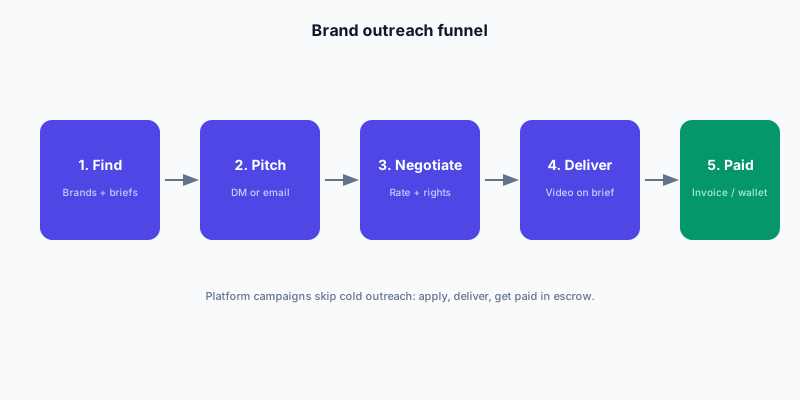
Email outreach works well for mid-size and larger Indian brands that have a marketing team. Find the brand's contact email from their website or LinkedIn. If the website only shows a general info or customer service email, use LinkedIn to find the marketing or brand manager directly.
Subject line: keep it under 50 characters and specific. 'UGC video for [Brand Name] - [your niche] creator' or 'Content collaboration inquiry - [follower count] engaged [niche] audience' work well. Avoid vague subjects like 'Collaboration opportunity' or 'Partnership inquiry'.
Email body structure: introduce yourself in one line, reference the specific product or campaign you noticed, make your offer in two to three sentences with a link to your portfolio or sample video, state your rate or rate range, and close with a specific ask - a call, a reply, or a specific question. Keep the whole email under 150 words. Attach nothing in the first email.
Follow up once after seven days if you get no response. Two unanswered follow-ups means this brand is not a current fit and your time is better spent pitching other brands. Do not follow up more than twice.
How to do a paid brand collaboration step by step
- Step 1: Agree on deliverables and usage rights before signing anything
Before you confirm any collaboration, both you and the brand must agree on exactly what content you are providing (number of videos, format, length, platform), where the brand can use it (their own social, paid ads, email, product pages), for how long they can use it, and whether they can modify the content. Getting this in writing is the most important step in any paid deal. Verbal agreements fall apart and leave you with no recourse.
- Step 2: Confirm the rate and payment timeline
Agree on the total fee and when payment is due. The standard for Indian creator deals is 50 percent upfront and 50 percent on delivery, though many platforms like UGC Content handle this automatically via escrow. For direct brand deals, insisting on 50 percent upfront is professional and reasonable. Brands with legitimate budgets expect to pay a deposit. Brands that resist any upfront payment or push for post-performance payment on your first deal are higher risk.
- Step 3: Receive and review the brief
Once the deal is confirmed, the brand sends a brief. Read it fully before filming anything. Note required format, tone, key messages, and any restrictions. If anything is unclear, ask before filming. A five-minute clarification call or one WhatsApp message saves a complete reshoot.
- Step 4: Film, edit, and deliver on time
Film according to the brief requirements. Edit to the specified length and format. Deliver before the agreed deadline. Include a short note with your delivery describing what the video covers. If you need more time, communicate this at least 48 hours before the deadline, not on the day.
- Step 5: Handle revisions professionally
Most brands request one round of revisions on the first collaboration. Treat revision requests as specific feedback, not criticism. Address every point in the revision request and re-deliver. If a revision request asks for something outside the original brief (a different product claim, a longer video, additional scenes that were not in the brief), it is reasonable to flag this and discuss whether additional payment is warranted.
- Step 6: Invoice and collect payment
Send your invoice after approval (or per the agreed timeline if partial payment was upfront). Your invoice should include your name and PAN number, the brand's name and GSTIN if applicable, a description of the services provided, the agreed rate, payment due date, and your bank details or UPI ID. Keep a copy of every invoice. If payment is late, follow up professionally via email after the due date.
How to negotiate payment as a creator
Negotiation is normal and expected in creator brand deals in India. The first rate a brand offers is not always their final rate, and most brands expect a counter-offer. Not negotiating leaves money on the table.
Start by knowing your floor rate before you open any negotiation. Your floor rate is the minimum you will accept for a specific deliverable given the time and effort involved. For a 30-second UGC talking-head video with no ad usage rights, many beginners set a floor of Rs. 1,500. With full digital ad usage rights included, the floor should be Rs. 3,000 or higher because the brand is gaining the right to use your face and voice in paid advertising.
When a brand offers below your rate, do not immediately accept. A simple response like 'My rate for this format with ad usage rights is Rs. 4,000. If the budget is tighter, I can do the same video without paid ad rights for Rs. 2,500' gives the brand a choice and positions you as professional rather than just cheap. Many brands will meet you in the middle.
Usage rights are the most frequently missed part of creator negotiations. If a brand wants to use your video in paid Facebook, Instagram, or Google ads, that is a commercial usage license and it should be priced higher than organic social use. Most large Indian brands know this and expect to pay the difference. If a brand does not mention usage rights at all, ask directly before you deliver: 'Will this video be used in any paid advertising?' The answer should be in writing.
Contracts and usage rights for Indian creators
You do not need a formal contract for every brand deal, but you do need something in writing confirming deliverables, rates, payment timeline, and usage rights. An email thread with clear confirmation from both sides is legally binding in India and is sufficient for most deals under Rs. 25,000.
For larger deals (above Rs. 25,000 or any deal involving exclusivity, long-term ad usage, or white-labeling), request a simple written agreement or use a creator contract template. The agreement should cover: the deliverables and deadlines, the agreed fee and payment schedule, what platforms the brand can use the content on, for how long, whether they can modify the content, whether you can showcase the work in your portfolio, and whether there is an exclusivity clause preventing you from working with competing brands.
Exclusivity clauses are common in larger brand deals. If a brand asks you not to work with competing brands for a period of time, this should be priced into the deal. Exclusivity for 30 days in a specific product category is typically worth 50 to 100 percent additional fee on top of the content creation rate.
For Indian tax purposes, your creator income is subject to TDS (Tax Deducted at Source) if the payment is above Rs. 30,000 in a single transaction from a company. Companies will typically deduct 10 percent TDS and issue a Form 16A. This is not additional tax - it is an advance against your annual tax liability. Keep records of all TDS deductions and consult a chartered accountant before filing your income tax return.
Red flags to watch for in brand deal requests
- Brand refuses to confirm any terms in writing and wants everything done verbally or through casual WhatsApp messages only.
- Brand asks you to post and says payment will come after the post performs well - performance-linked payment for creator work shifts all the risk to you.
- Brand offers only free product with no cash and insists this is 'standard' for creators at your level.
- Brief arrives the day before a required delivery date with no prior discussion - this suggests poor organization and often leads to quality disputes.
- Brand asks you to make specific medical, legal, or financial claims that are not verified or approved - this creates legal liability for you personally.
- Brand wants perpetual, unlimited usage rights across all platforms for a flat fee - full rights in perpetuity are worth significantly more than single-use social rights.
- Brand disappears after delivery and does not respond to invoice or payment follow-up - stop working with any brand that does not pay within two weeks of the agreed date.
- Brand asks you to use their product without disclosing it is a paid partnership - this violates ASCI guidelines in India and Instagram's own policies, which require disclosure on paid posts.
Worked example: Rahul's first direct brand deal
Rahul is a 27-year-old in Bengaluru who posts fitness and workout content on Instagram and had built 6,200 followers over 18 months. He used protein supplements daily and wanted to turn that into brand income.
He searched Instagram for Indian protein supplement brands with active ad campaigns (visible from the 'Sponsored' label on their posts) and identified four brands that were smaller D2C companies without large creator rosters. He sent a specific DM to each brand referencing a product he had genuinely tried, included a link to two videos on his profile that showed his filming quality, and proposed a Reel at his rate of Rs. 4,500.
One brand responded within three days. Their marketing manager asked for his media kit. Rahul sent a one-page PDF with his follower count, engagement rate (4.2 percent), audience demographics from Instagram Insights, and two video samples. The brand offered Rs. 3,000 for one Reel and one Story.
Rahul countered at Rs. 4,000 for the Reel and one 24-hour Story, with the brand getting rights to reshare the Reel on their own feed but not use it in paid ads. The brand accepted. Rahul asked for 50 percent upfront before filming. The brand paid immediately via UPI.
He received the brief, filmed the Reel in one afternoon, delivered three days before the deadline, and received one revision request (they wanted him to include the product code for a 20 percent discount in the CTA). He added it in two minutes and redelivered. Final payment arrived the next day. Total time from first DM to payment: 18 days.
Common mistakes when doing brand deals
- Pitching brands outside your niche in hopes of getting any deal - brands see this immediately and it lowers your credibility in the pitches you send to relevant brands.
- Starting your DM with 'Hi, I am a content creator and I want to collaborate' - this is the opener of thousands of daily spam messages that brand managers ignore.
- Not specifying usage rights in your pitch - if you do not specify, the brand will assume broad rights and it is awkward to negotiate afterward.
- Accepting a barter deal as a foot in the door with the intention of negotiating for cash later - this almost never works. Brands categorize you as a barter creator once you accept unpaid work.
- Posting paid brand content without a clear sponsorship disclosure - add 'Paid partnership with [Brand]' via Instagram's built-in tool or include '#ad' or '#sponsored' in the caption. ASCI guidelines require this and Instagram's algorithm can suppress undisclosed paid content.
- Invoicing without a PAN number or proper service description - brands with finance departments will reject informal invoices and payment delays result.
- Giving brands unlimited perpetual rights when your agreement only specified social media use - specify the platforms, duration, and modification rights in every deal.
FAQ
How to do brand collaboration on Instagram in India?
Find brands in your niche, send a short DM or email with your niche, a specific content idea, and 2-3 sample videos, negotiate rate and usage rights in writing, deliver on brief, and invoice after approval. UGC-style collabs need zero followers; influencer collabs usually need 5,000+ engaged followers.
How many followers do you need to do a paid brand deal in India?
For UGC-style deals where you provide a video file, zero followers are needed. For influencer deals where brands pay to access your audience, 5,000 to 10,000 engaged followers is a practical threshold in most niches in India. Engagement rate matters as much as raw follower count.
How do you find a brand's email for collaboration?
Check the brand's Instagram bio, website contact page, or LinkedIn company page. If only a customer service email is listed, find the Marketing Manager or Brand Manager on LinkedIn and message them directly. The direct contact almost always responds faster than a general inbox.
What should you charge for a brand collaboration on Instagram in India?
For UGC content (video file for brand use): Rs. 1,500 to Rs. 8,000 per video depending on format and usage rights. For influencer posts (posting to your audience): Rs. 500 to Rs. 3,000 per post for under 10,000 followers, Rs. 3,000 to Rs. 20,000 for 10,000 to 50,000 followers. Include a rate bump of 50 to 100 percent if the brand wants paid ad usage rights.
Can you do brand deals in India without a GST number?
If your annual income from brand deals is below Rs. 20 lakh, GST registration is not mandatory. You can still invoice brands and receive payment without a GSTIN. For income above Rs. 20 lakh, GST registration is required and you must charge 18 percent GST on your creative services. Brands with a GSTIN can claim input tax credit on the GST you charge.
What is a media kit and do you need one?
A media kit is a one-page document that summarizes your profile for brands: follower count across platforms, engagement rate, audience demographics, niche, content samples, and past brand work. You do not need one to get your first deal, but it becomes useful once you have any stats or brand experience to show. Many Indian creators build media kits in Canva using free templates.
Should you do free brand deals to build a portfolio?
No. If you have no portfolio at all, the better approach is to film product videos of items you already own and use those as your portfolio. This creates samples without doing unpaid brand work. Accepting free deals to build a portfolio trains brands in your niche to see you as someone who works for free.
What does ASCI say about Instagram brand collaborations in India?
The Advertising Standards Council of India requires that any paid brand post be clearly identified as advertising. Instagram's 'Paid partnership with [Brand]' label, or the hashtags #ad or #sponsored in the caption, satisfy this requirement. Hidden or unclear disclosures can result in ASCI complaints against both the brand and the creator.
How do you handle a brand that does not pay after delivery?
First, send a polite payment reminder email on or just after the due date. If there is no response after seven days, send a firmer follow-up stating the due date and the amount owed. If you are still not paid after 14 days, send a formal notice via email stating you will escalate. For deals above Rs. 10,000, you can file a complaint in consumer court or through MSME Samadhaan if you have a written agreement. Using a payment-protected platform like UGC Content eliminates this risk entirely.
Can you work with multiple brands in the same niche?
Yes, unless you have signed an exclusivity clause. Always check whether a collaboration agreement includes any exclusivity restrictions before accepting new deals in the same category. If no exclusivity is mentioned, you are free to work with competing brands. Many experienced creators disclose competing brand work upfront in negotiations to keep everything transparent.
Is Instagram brand collaboration income taxable in India?
Yes. Brand collaboration income in India is taxable as professional or business income under the Income Tax Act. Companies paying you above Rs. 30,000 in a single transaction may deduct 10 percent TDS. You must include all creator income in your annual income tax return. Keep invoices and bank records for all brand payments. Consult a chartered accountant to determine the correct ITR form for your situation.